

An Inquiry Into How to Live
there is nothing blind in my trust

I came across an interview once in which Krista Tippett was speaking with the poet, Marie Howe. Marie was explaining an exercise she has all of her students practice - to write ten observations of the actual world. She explained, “Just tell me what you saw this morning like in two lines. I saw a water glass on a brown tablecloth, and the light came through it in three places. No metaphor. And to resist metaphor is very difficult because you have to actually endure the thing itself, which hurts us for some reason.”
Ever since I read this I’ve tried to refrain from using metaphor in writing. I try to write as simple as possible; to distill a thought into a few words so all that’s left is the truth. I want to live honestly. And I crave pragmatism as a counter balance to the elusive nature of Romanticism. I’ve always been partial to the happy medium, never falling into one extreme or the other. The extremes of the scale seem inaccurate. The truth reveals itself somewhere in the center. I want to look at things as they really are, regardless of what I might see, and I want to do that here.
But I confess I’m finding it impossible to write this piece without the use of metaphor. In her book Rootless, Christy Wampole writes, “In [Blumenberg’s] methodology for the study of absolute metaphors, he argues that, in many cases, metaphors are not simply rhetorical flourishes, replaceable by non-metaphorical language, but that they allow thoughts to be expressed that are impossible to express in nonfigurative terms. These are absolute metaphors… The root is clearly an absolute metaphor…”
So I hope you’ll forgive me this - using root as metaphor.

I’ve been obsessed with roots for years. That’s the only word I know to describe it. It’s always on my mind. It confuses me that some people find roots in the place they were born, never having to leave. Some wander to discover where their roots are, but have a deep understanding that they exist. And others, like me, struggle to name what roots are; they struggle to believe such a thing exists for them.
Though I’ve been sincere in my search for a place to call home—a resting place for my mind where everything makes sense and I can belong—I think I’ve been misguided in my belief that I’ll find some kind of permanence. I’ve been searching my whole life for something that remains out of reach.

It’s raining here—like you can hear it hitting the roof type of rain—and I feel at home, finally. Something has shifted and I don’t know what to do with these feelings, but the rain has always known how to help me hold them. When I decided to move to California, there were questions from those who know me best. I’ve always said I wanted to spend my life chasing autumn, and here I was determined to live in the endless summer.
I keep thinking about something I read in The Architecture of Happiness by Alain de Botton. “Our love of home is in turn an acknowledgment of the degree to which our identity is not self-determined. We need a home in the psychological sense as much as we need one in the physical: to compensate for a vulnerability. We need a refuge to shore up our states of mind, because so much of the world is opposed to our allegiances. We need our rooms to align us to desirable versions of ourselves and to keep alive the important, evanescent sides of us.”
This is the best explanation I have for why I needed to come here. I needed my environment to be warm. I needed the endless summer to keep alive an essential side of me that was struggling to stick around. And buried beneath this was a hope that California held the answers I craved. I hoped the sun might save me. In a way it did, but the truth of life is cyclical, seasonal.
As am I.
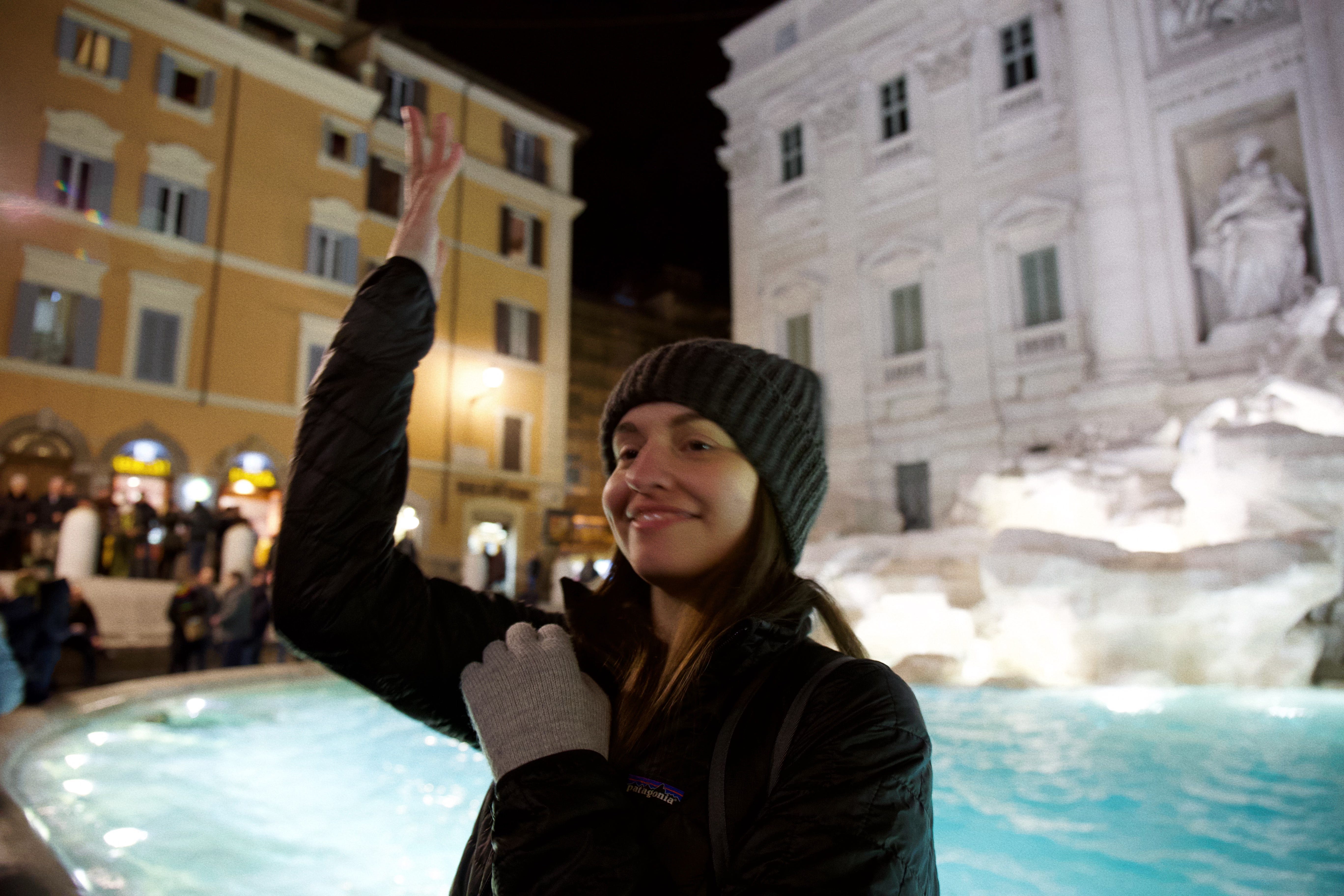
I’m rootless, a stranger wherever I go. I always have been. To have a home, a reliable foundation… it’s something that has mostly alluded me, but not for lack of trying. And not because I lack support in my life, but because I lack something else. Or maybe I possess something else, I’m not sure, but I admit the Romantic in me is in love with this idea.
I’ve never managed to establish roots to any significant degree of success. Whether I live somewhere for a year or ten, it never seems to stick. I feel apologetic about this. I feel like it must mean there is something wrong with me.
For better or worse, I cannot tame my wandering spirit. I find myself restless and jittery, thinking that being alone somewhere foreign is far better than being alone somewhere familiar. I start making plans to disappear. I fantasize about telling no one where I am, not speaking to anyone for as long as I need. Going off on my own, like always. Going where there are no obligations, no expectations. I feel the urge to go away almost constantly.
Sometimes I wonder if I go far away because then the distance I feel would have reason. If I can’t be close to you (or close to the me who exists in this place), I’d rather not be nearby. To see the gap, to be so close I can touch it but still not be able to bridge it, hurts me. To ease the feeling I go somewhere else. Sometimes I only need a few weeks. Sometimes the leave is permanent.
I find myself longing to go somewhere new to discover a self which only exists there. And I find myself longing to go back to a place to find the person I once was, even as I’m aware she no longer exists. Still, I feel a little closer to her bright-eyed innocence when I return.
I feel roots, I think.
I’m scattered all over, and it becomes increasingly difficult to keep track. My body holds onto the places I once belonged. My heart understands there are more selves to be found. My roots are a vague memory. My roots are everywhere.
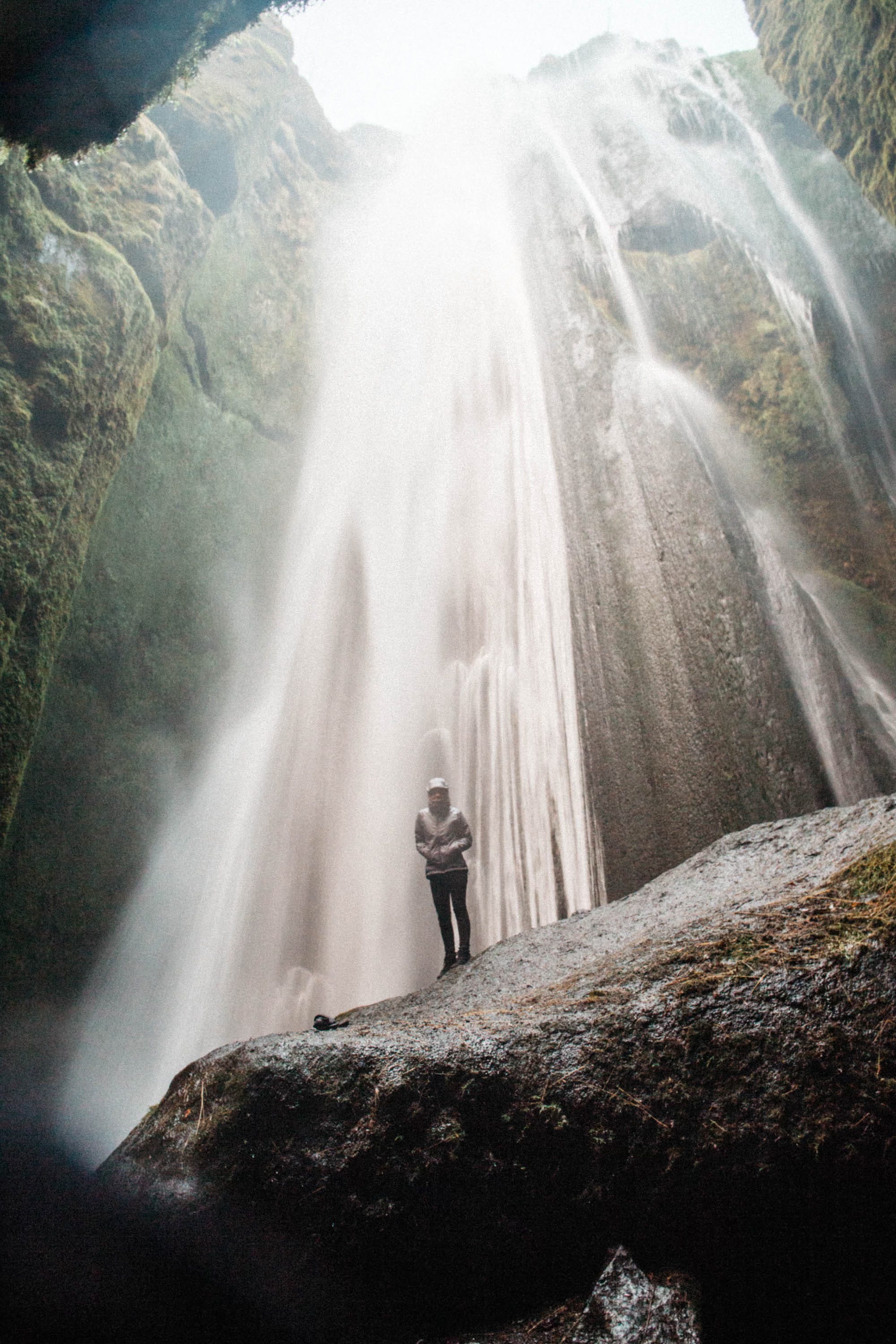
In his travel memoir, The Temporary European, Cameron Hewitt writes, “Travel is rife with epiphanies. And some of them are inconvenient, even uncomfortable. As I observe the deepness of connection that many Europeans feel to their heritage, I’m struck by the contrast to my own life, and my own country.
Many of the Europeans I meet seem to understand and accept who they are on a primal level. Meanwhile, many Americans struggle with finding a sense of meaning. Existential crisis is our national pastime. Some eschew family traditions as corny or pointless, then scramble to find other things to fill that void. We turn to meditation, or materialism, or religion, or political movements left and right, or travel. Many of us still haven’t found what we’re looking for. I wonder sometimes how much this owes to our itinerant nature.”
I’ve wondered this too. From a very young age I clung to the idea that I was going to get out. I looked around and saw so many people content with what was right in front of them. This was never enough for me. I was curious. I was insatiable. Something else existed out there, and I had to find it. Have I been lost from the very beginning?
“It is fair to say that a large part of what is usually called the West is suffering from an overwhelming sense of rootlessness. But what is it? Simply a synonym for alienation or disconnectedness? A metaphorical way to say that people can no longer count on institutions they believed in and cannot depend on security, community structures, or even language? In any place that has been touched by large-scale displacements of people owing to war, colonization, famine, disease, or political ostracism; or where people have lost contact with ancestral memory; or where there is a general sense of isolation resulting from either new social habits or technology’s alienating effects; or where people feel estranged from the environment because of the human’s self-extraction from it, people describe themselves as uprooted… Is our species, the exception to so many rules, destined to live its fate of exception all alone, uprooted from nature, history, and existential serenity?”
- Christy Wampole, Rootless
Cameron finishes his thought by saying, “Middle America doesn’t just grow America’s corn and potatoes; it grows Americans, who are pulled out at the root to be sorted, distributed, and transplanted across our land.”
Much of who we come to be is through our geography.
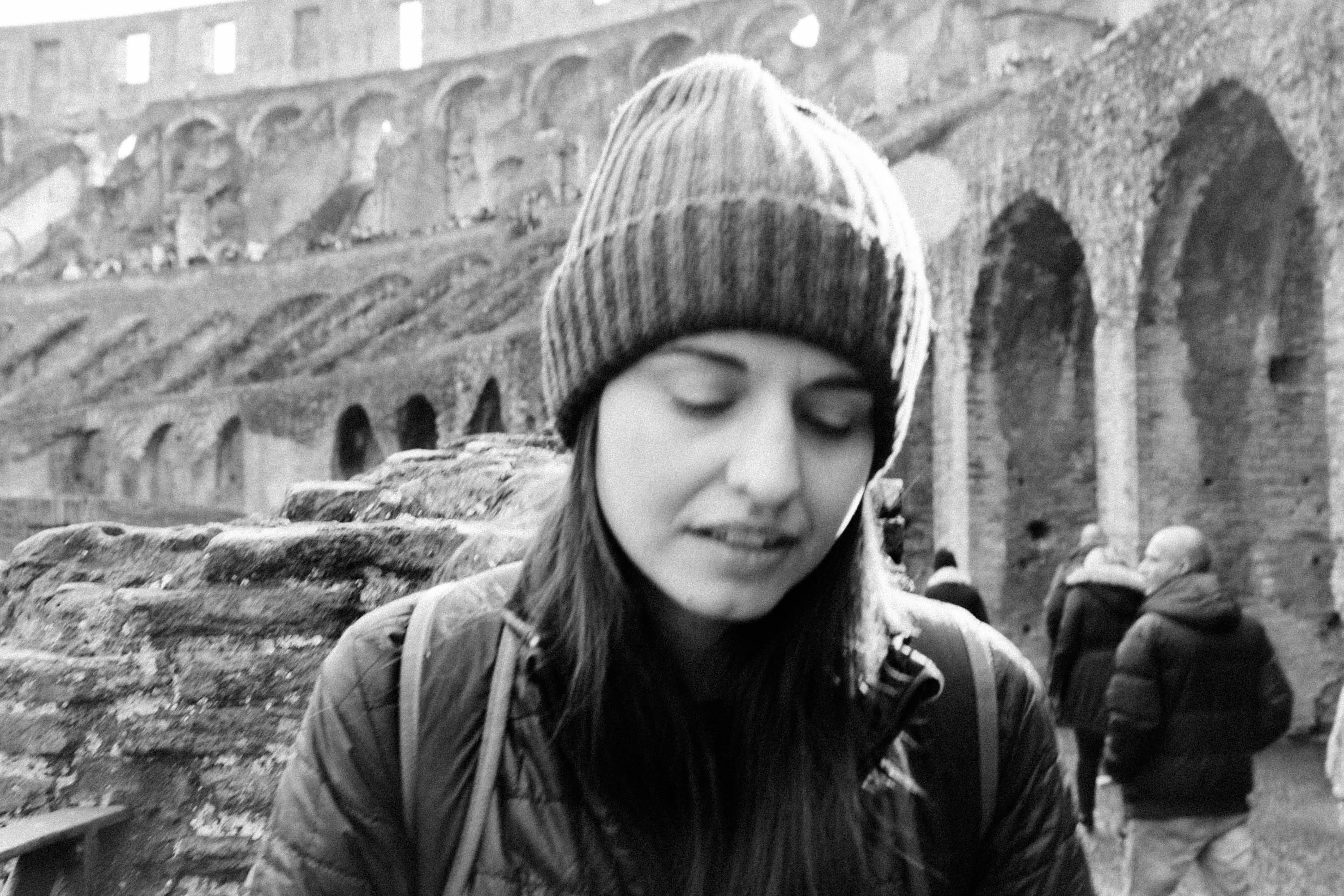
I archived my entire Substack recently.
I have this tendency to want to erase every trace of me—in both positive and negative connotations. When I’ve moved through something and I feel like I’m someone new, everything that came before feels false. And when a wound has been ripped open and I feel exposed, the thought of my self being accessible is unbearable. I want to go away, I want to disappear. Sometimes I need to cut out all of the noise to remember what I sound like, and sometimes this looks like being less visible.
Distance is the only way I know how to sort through things. I like to wrap my head around an experience then let people in on it after the fact—to protect myself, but I also like to believe I do it to protect others. I want to shelter you from my feelings. Because when the dam breaks from the pressure, all of that water will flood my heart and crack my ribs. The knife tends to cut deep, too deep, and I try very hard not to bleed all over others. I shore up my walls and make the proper repairs. I stay away until I’m certain it won’t break open again; until I’m certain I can talk about it without showing how much it hurt.
“If you are a private poet, then your vocabulary is limited by your obsessions. It doesn’t bother me that the word “stone” appears more than thirty times in my third book, or that “wind” and “gray” appear over and over in my poems to the disdain of some reviewers. If I didn’t use them that often I’d be lying about my feelings, and I consider that unforgivable. In fact, most poets write the same poem over and over. Wallace Stevens was honest enough not to try to hide it. Frost’s statement that he tried to make every poem as different as possible from the last one is a way of saying that he knew it couldn’t be.”
- Richard Hugo
I think there are some things we deal with our entire lives, no matter how much effort we exert in our attempt to get over them. This feeling of strangeness, this impulse to extract myself, is mine.
Even in my writing I’m rootless.
I cut ties with my previous work and start fresh, and this calms me even if eventually I regret the absolute and total extirpation of my past work. I’m no longer tethered to the weight of before. I’m floating and I’m free.
I can’t help it, I love a clean slate.

I wonder if this is my fate—to wander with no place to return to. I’m not convinced anymore I need to find a permanent home, literally or figuratively, but I don’t believe anyone wants to be completely unmoored. Sometimes when it’s 3am and I feel like I’m floating, I reach out in the dark and place my palm flat against the wall to feel something solid; as a reminder that I’m solid too. I still desire an anchor of some kind.
It seems a bit ironic that I feel most found when I’m lost. Strange lands feel like home. But I want to venture off with the knowledge there is somewhere or something—or perhaps what I’m apprehensive to confess, someone—for me to return to. Feeling rootless is familiar, but there is a piece of me that, when lying in that delicate dark, craves security, which I think means acceptance. I want someday, in my own way, to belong.
“This metaphor’s broad applicability to such a variety of circumstances reveals a meaningful pattern in the human psyche: Continuity is preferable to discontinuity. The root is an integrating metaphor, one that allows for connections to be made between past, present, and future, between remote geographic spaces, between neighbors, between the human and its ecosystem. To be rootless is to lack context. What becomes clear in the incessant reliance on the metaphor of rootedness is that the desire for temporal, spatial, epistemological, and ontological continuity is an elementary human need… Figurative language is the outlet for a deep-seated apprehension about permanent estrangement from the context whence we came.”
- Christy Wampole
Tillandsia are a plant commonly known as air plants. They’re called air plants because they obtain their nutrients and water from the air, not requiring soil for nourishment. They do not have a functional root system, and any root system they do have has grown to act as an anchor only, to help attach themselves to the surfaces they commonly grow on, such as rocks or moss. Their leaves are their primary means of nutrient absorption, not their roots.
Here is where the plantlike metaphor brings me continuity:
I’m an air plant.
Air plants die if you plant them in soil, and the same seems to be true of me. Force me to stay in one place for too long and watch me wither.
The moment this occurred to me is the moment something clicked into place. Suddenly I felt less apologetic for being me. I felt less wrong for being unsuccessful in finding a place to “put down roots”. I’m letting it go—the fear of judgment for this being my natural disposition. I’ve spent so much energy worrying whether or not I’m living right according to some undefinable source, and thinking of myself as an air plant is giving me a little courage. A piece of me that has been screaming, begging for understanding, can finally relax.
In this case, the metaphorical offered the truth. I’m in constant flux, and I need my environment to reflect back to me who I am, and I am not wrong to live this way.
Somewhere in this meandering question of a letter is something simple and uncomplicated: Do I trust myself in this? Do I trust myself enough to not need roots? Do I trust myself to know where I need to go, and when? Can I live in a meaningful way without being certain of the meaning?
Life requires a blind trust. No, that’s not what I mean. What I mean is that life will hurt, and it will be unbearable, and there will be struggle, and there are many moments when it feels like I’m on my own. So, I’m on my own. I’ll stand up, dust myself off, and face it again. And again. And again.
I am not naive.
There is nothing blind in my trust.
“Don’t wait for it,” I said. “Create a world, your world. Alone. Stand alone. And then the love will come to you, then it comes to you.”
- Anaïs Nin